Hurricane season runs from June 1 through November 30, and in Pinellas County the biggest question after a storm is rarely “did the roof survive?” It is “how much water got in, and how fast can we dry it?” Wind gets the headlines, but water intrusion, followed by mold, causes most of the lasting damage we see in St. Pete Beach and the surrounding communities. This checklist covers what to do before, during and after a storm to keep water and mold damage to a minimum.
Before the season: fix the small things
- Roof and flashing. Have loose tiles, lifted shingles and cracked flashing repaired now. Most storm-related water intrusion starts at a roof defect that was already there.
- Gutters, downspouts and yard drainage. Clear them so heavy rain moves away from the slab instead of pooling against the house.
- Windows, sliders and doors. Replace worn weatherstripping and re-caulk gaps. Wind-driven rain will find any opening on the Gulf-facing side.
- Air conditioning. Have the system serviced and the condensate line cleared. Your AC is your main defense against humidity after the storm passes.
- Know your shutoffs. Locate the main water valve and the electrical panel, and make sure everyone in the house can operate them.
- Photograph the house. Take dated photos and video of every room, the roof, the exterior and major appliances. If you need to file a claim, “before” documentation is invaluable.
- Review your coverage. Understand what your homeowners policy covers versus what requires a separate flood policy, and note your deductibles for named storms.
When a storm is approaching
- Install shutters or panels, and move outdoor furniture and anything that can become a projectile inside.
- Move valuables, documents and electronics off the floor and away from windows. Put important papers in a waterproof container.
- Set the AC a few degrees cooler than usual ahead of the storm. If the power goes out, the house starts cooler and drier.
- If you evacuate, shut off the water at the main and consider turning off the water heater. A pipe break in an empty house can run for days.
- Keep your insurance company’s claim number and our number, (727) 222-1002, saved in your phone.
After the storm: the first 72 hours decide everything
Once it is safe to return, work through this order:
- Check for hazards first. Downed lines, gas smells, structural damage and standing water near electrical outlets. Do not enter a flooded room with the power on.
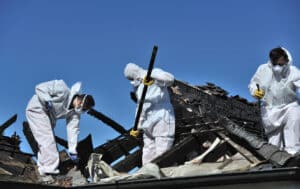
- Stop active water intrusion. Tarp roof openings and cover broken windows. Emergency board-up and roof covers are part of what we do, day or night.
- Document before you clean. Photograph and video all damage and the water lines on walls before moving anything.
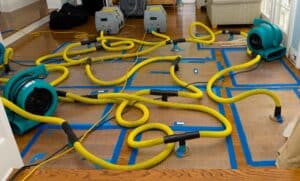
- Get the water out and start drying. Remove standing water, pull up wet rugs, lift furniture off wet floors and get air moving. If the power is on, run the AC. If wet drywall, cabinets or wood flooring are involved, professional drying equipment makes the difference between a repair and a rebuild.
- Treat flood water as contaminated. Storm surge and flood water carry bacteria, sewage and, on the coast, salt. Porous materials that soaked in it usually need to be removed, not just dried.
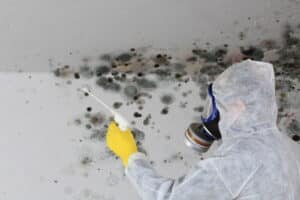
- Watch the clock on mold. Growth can start within 48 to 72 hours on wet materials. If a room could not be dried within that window, it should be inspected before it is closed back up.
Common mistakes we see after Gulf Coast storms
- Opening the windows to “air it out.” In summer, outdoor air is more humid than the wet house; keep it closed and run the AC or dehumidifiers.
- Drying only the surface. Carpet feels dry while the pad and subfloor stay saturated.
- Rebuilding too soon. New drywall over a damp wall cavity guarantees a mold call a few months later.
- Waiting on the adjuster before starting mitigation. Policies generally expect you to prevent further damage; document everything and start drying.
Storm damage help in St. Pete Beach and Pinellas County
Marathon Restoration provides 24/7 emergency response for water damage, board-up and drying, and follows through with mold remediation when it is needed. We work with your insurance carrier and document the job from the first visit. Before the next storm, save (727) 222-1002, and if the water has already come in, contact us now.